Adi

THE FIFTEENFOLD NON-DUALISTIC RAJA YOGA OF SHANKARACHARYA
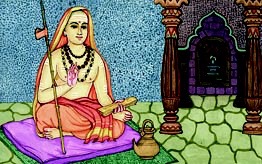 Adi Shankara, the Greatest Yogi
by David Frawley
Shankaracharya, or Adi Shankara the teacher, is one of the greatest spiritual masters in the history of India. Shankara has often been called the greatest philosopher of India, if not of all time and of the entire world. His teaching is highly rational, clear and concise, as well deeply mystical, unfolding all the mysteries of Self, God, the universe, the Absolute and immortality, with subtle meditative examinations of mind and consciousness. Most of what today is called Advaita (non-dualistic) Vedanta reflects the mark of his insights or even follows his language of discourse. He is the main classical teacher of the Advaita Vedanta tradition that derives from the Vedas.
Shankara’s greatness has been hailed by such monumental modern gurus of India as Swami Vivekananda, Swami Sivananda of Rishikesh, Ramana Maharshi, Swami Chinmayananda, Swami Dayananda (Arsha Vidya) Maharishi Mahesh Yogi and Paramahansa Yogananda, to name a few. Most of the original Yoga that came to the West starting with Vivekananda was styled “Yoga-Vedanta,” reflecting Shankara’s influence, and aimed at Self-realization through meditation, not simply at skill in asana practice. Indeed Shankara has been a more dominant figure than Patanjali for these great Yoga-Vedanta masters and for India as a whole historically. He has been regarded as a veritable manifestation of Lord Shiva, the king of the Yogis himself, evidenced by his name Shankara, which is one of the main names for Shiva as well.
Shankara is the main traditional teacher of Jnana Yoga or the “Yoga of Knowledge,” which is usually regarded as the highest yogic path. Even Patanjali states that liberation or Self-realization is gained by knowledge, not by any other means and makes Yoga a means of achieving that higher knowledge.


